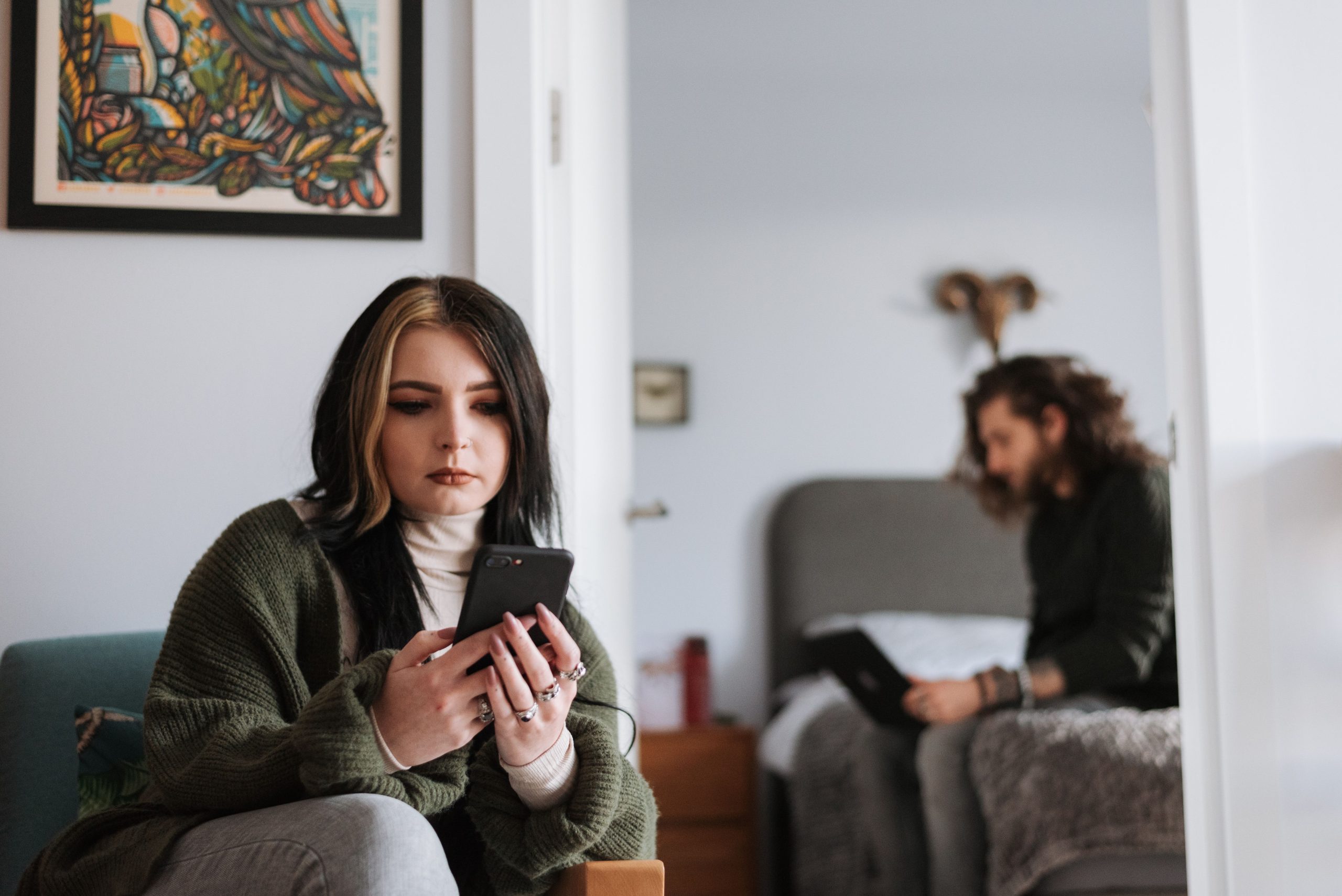
Privacy in a relationship is often treated as a test of trust: if you have nothing to hide, why lock your phone? That framing misses the point. Trust is not unlimited access. Two people can be close, share plans and still keep private conversations, accounts, location history or a device passcode to themselves.
Healthy discretion is a set of choices made without pressure. The useful question is not whether couples should share everything, but whether each person can say yes, no or not now without fear of punishment. Digital boundaries matter because phones turn small acts of access into a detailed picture of someone’s life.

Trust does not require an open-phone policy
Some couples willingly share passcodes or location with each other. That can be practical, especially when coordinating a trip or checking that someone got home safely. But a shared setting is not automatically a permanent agreement. Consent can be limited, revisited and withdrawn.
I would avoid making phone access a loyalty test. A partner may have confidential conversations with friends, work information, health details or private notes that involve other people. Refusing to hand over a device is not proof of betrayal; in a healthy relationship, a boundary can be discussed without turning it into a trial.
Talk about specifics instead of relying on assumptions. Is live location sharing for a particular journey or all the time? May either person post photos of the other? Are intimate images off-limits to anyone else, including friends? What happens to shared passwords after a breakup? Naming the boundary makes it easier to respect than a vague promise to “be discreet.”
Your phone shares more than messages
Location is not just a map pin. It can be exposed through a shared Apple or Google account, a family mobile plan, an app, a car account, a photo’s location metadata or a friend tagging a post. WESNET’s 2023 Survivor’s Guide to Location Tracking recommends looking across those different sources rather than assuming one setting controls everything.
That changes the practical privacy check. Review who can see your location in the apps you use, which devices are signed in to your accounts, and whether photos reveal a home, workplace or regular route. Check shared calendars, albums, cloud storage and smart-home devices too. A person does not need to read a message to learn a lot from repeated arrival times or an automatically shared itinerary.

On iPhone, Apple’s Safety Check can review sharing with people and apps, connected devices and account security. It is a useful inventory, not a complete audit: Apple notes that some non-Apple accounts and social-media sharing are outside its scope. Android users can look for equivalent location-sharing, account-device and app-permission controls in their Google and device settings.
A privacy conversation works best before a conflict
Bring up digital boundaries at a calm moment, not while demanding to inspect a phone. Describe what you want and why: “I’m comfortable sharing location on the drive, but I want it off afterward,” is clearer than “You’re too controlling.” Then ask what the other person needs and agree on a practical arrangement.
Consider the awkward cases as well as the easy ones. If one person knows the other’s passcode for emergencies, does that permit routine reading of messages? If you share a tablet, are individual accounts or profiles possible? If one partner posts a photo, should the other approve it first? There may be no universal answer, but a mutual agreement is different from silently treating access as owed.
Discretion also applies to sensitive searches and private services. Someone researching an escort München may reasonably want to keep that browsing private; the broader principle is to avoid exposing another adult’s choices or personal information without permission. A link, screenshot or shared account can disclose more than intended, so consider whose data is visible before forwarding or saving it.
If you suspect monitoring, do not rush to change everything
There is an important difference between a disagreement about boundaries and covert surveillance. If a partner repeatedly knows details they could not reasonably know, has installed software without consent, or uses location access to intimidate or control you, treat the situation as a safety concern rather than a settings problem.
The U.S. Federal Trade Commission explains that stalkerware can expose someone’s location, messages, calls and photos. It also warns that removing it or changing access may alert the person monitoring the device. If that possibility feels real, use a safer device to seek support and make a plan before changing settings, confronting the person or resetting the phone. A local domestic-abuse advocate can help think through personal safety and evidence preservation; there is no single response that is safe for everyone.
The FTC’s guidance on stalkerware also notes that a factory reset or new phone may not be the right first move, particularly if it could erase evidence or trigger escalation. Keep records only if doing so is safe. You do not need to prove exactly how someone learned your location before asking a trusted person or support service for help.
After a breakup, close the digital doors deliberately
Relationships often leave behind quiet connections: shared streaming accounts, photo libraries, password managers, phone plans, delivery apps, home cameras and account-recovery numbers. Make a list before removing access. Update passwords for email and financial accounts first, because email often provides the route to reset other logins. Use unique passwords and turn on two-factor authentication where possible.
Then review active sessions and trusted devices, location sharing, shared albums and recovery contacts. Remove access you no longer want, but think through what the other person may be able to see or infer when you do. If the separation is tense or there has been controlling behavior, ask an advocate or trusted technical helper to review the plan with you.
Privacy is not the opposite of intimacy. It is one of the conditions that makes closeness voluntary: each person can share because they choose to, not because a device, password or location setting has made refusal impossible. The best digital agreement is not the one with the most access. It is the one both people can revise without fear.